


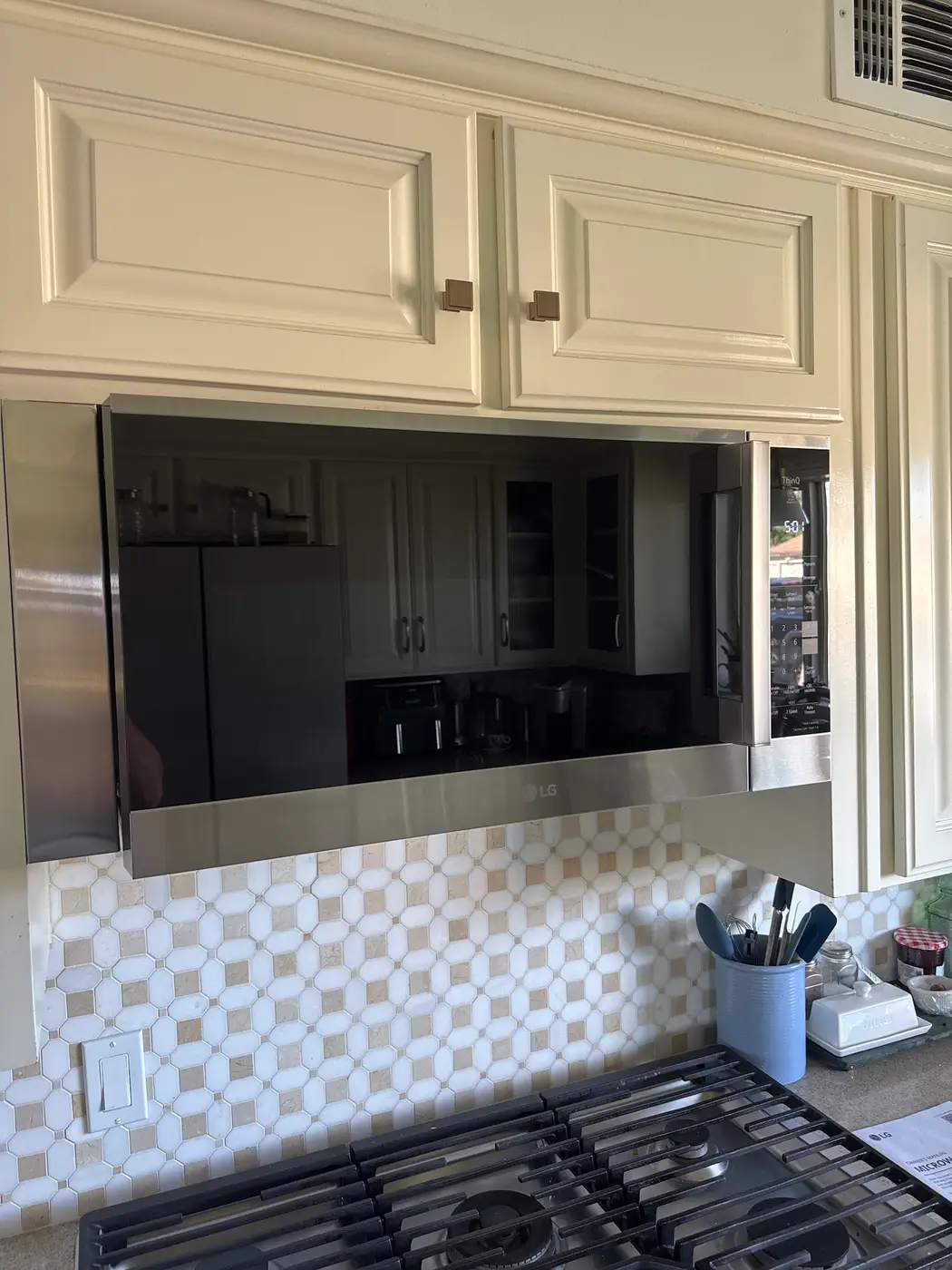
“Anton was very professional and efficient installing our microwave. I would highly recommend Installation Pros.”
Serving Los Angeles, Orange, San Bernardino, Riverside, San Diego, and Ventura counties
Installation in Southern California
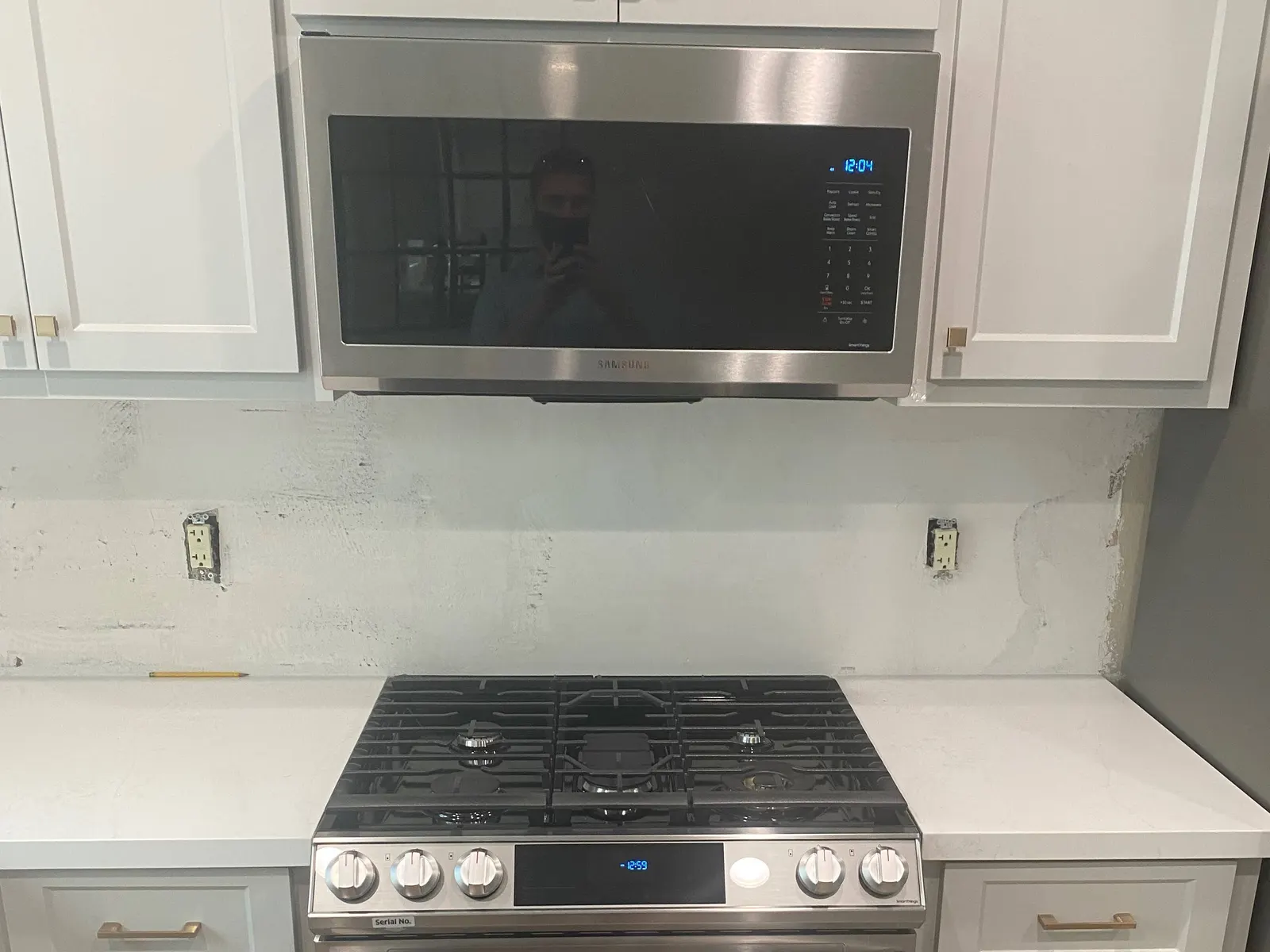
Make room for the appliance above the range, inside the cabinetry or over the island. We review the mounting space, model and existing ventilation before scheduling.
Start with the details
Different products have different mounting and ventilation requirements. Send the manufacturer’s model information with your request.
A ducted hood sends cooking air outdoors. A recirculating hood filters some grease and odor but returns heat, moisture and smoke to the kitchen, so ventilation experts recommend ducting outside where possible.
In new homes, California's energy code requires kitchen exhaust vented outdoors with minimum airflow; recirculating hoods don't count. A replacement hood generally has to match what an earlier permit required. Your city's building department decides when a permit applies.
It depends on the range and hood. As general guidance, a ventilation trade group suggests about 100 cfm per foot of range width against a wall (300 cfm for a 36-inch range) and 150 per foot over an island; one hood maker suggests 1 cfm per 100 Btu for high-output gas ranges. Your range and hood guides control.
Use the size and material in your hood's installation guide. One hood maker notes most hoods need at least a 3¼ × 10-inch or 6-inch round metal duct, and more powerful hoods up to 10-inch round. Keep the run short and straight; our team reviews the duct route for your project.
Yes, after reviewing your project. Our team can run new range hood duct through a wall or the roof, and cut or modify cabinets where the hood or duct needs it. Send the hood's model and photos of the area above your range with your request.
Yes. It works as the hood and can vent outdoors through the top or back, or recirculate with a charcoal filter. It mounts to an upper cabinet and the wall, so it can't go over an island.
Requirements vary by model. One maker's guide, for example, calls for a 30-inch-wide space with the cabinet bottom at least 30 inches above the cooking surface, at least one wall stud to anchor to, and an outlet on its own circuit in the cabinet above. Adding that outlet is electrical work for a licensed electrician.
Hood makers commonly suggest 24 to 30 inches between the cooktop and the bottom of the hood, with the hood at least as wide as the cooking surface. It varies by model and range type, so your hood's installation guide sets the exact height.
Not always. Under-cabinet hoods need one, but wall-mount chimney hoods, island hoods and built-in inserts inside custom hoods don't.
A clear next step
We review your equipment, location and access details, then contact you about scope and scheduling. Sending a request does not confirm a price or reserve an appointment.
Serving Los Angeles, Orange, San Bernardino, Riverside, San Diego and Ventura counties. Availability for your exact address is confirmed by our team.
How the process worksIn their own words, from Google and Yelp.
“Anton was very professional and efficient installing our microwave. I would highly recommend Installation Pros.”