
The system
The make and model of your reverse osmosis system, and whether it has a storage tank or is tankless.
Serving Los Angeles, Orange, San Bernardino, Riverside, San Diego, and Ventura counties
Reverse osmosis · Install Services
A reverse osmosis system shares the sink cabinet with your drain, disposal and supply lines. Send the system model and a photo of the cabinet, and our team follows up with an estimate.
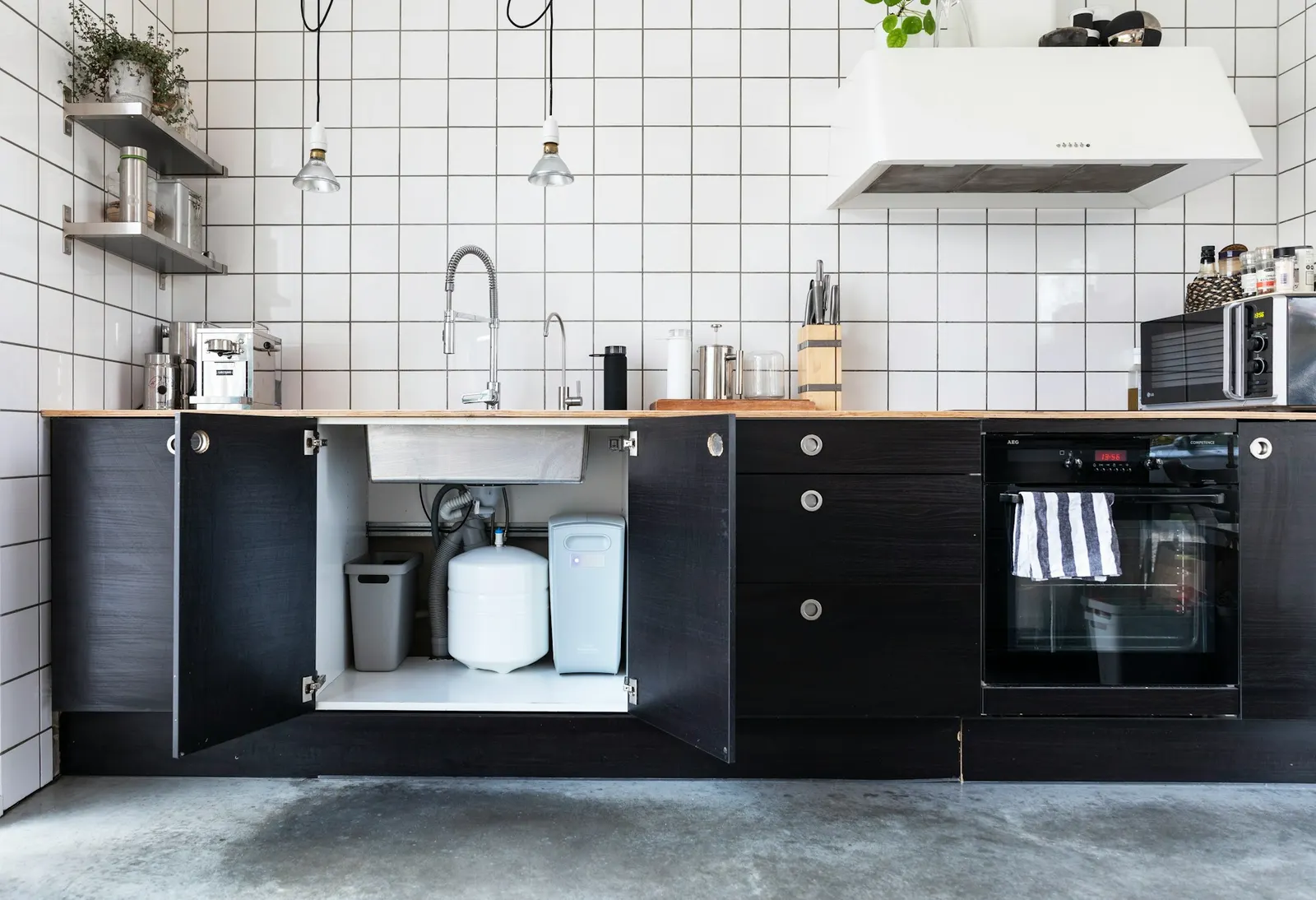
Bring your own system or tell us what you are considering. Our team confirms the fit under your sink before scheduling.
Start the conversation
The make and model of your reverse osmosis system, and whether it has a storage tank or is tankless.
What already sits under the sink: disposal, dishwasher connection, other filters, and the space left over.
Where the drinking-water faucet will go: an existing hole in the sink or counter, or a new one.
Before you reach out
Share what you know. Our team will follow up on anything else needed to review your request.
Yes. Section 611.2 of the California Plumbing Code requires the wastewater to enter the drain through an air gap or a certified air gap device, such as an air-gap faucet. The right arrangement depends on your system and sink; our team reviews it with your project.
Usually a separate drinking-water faucet, but a spare sink hole or an unused sprayer hole works without drilling. If one is needed, our team can drill a faucet hole after reviewing your countertop; tell us its material.
Most systems store filtered water in a small tank that refills over a few hours. Tankless systems save space but often use a pump that needs an outlet under the sink.
Follow your system's manual. A typical schedule is pre-filters every 6 to 12 months and the membrane every 2 to 3 years on city water.
It's the national standard for under-sink reverse osmosis systems, covering materials, design and performance, including at least 75% reduction of dissolved solids. The California Plumbing Code (Table 611.1) names it as the standard for point-of-use reverse osmosis units, so look for a system certified to it.
Some water always goes down the drain with the contaminants. Older systems drain five gallons or more per gallon made; newer designs use far less.
Often, if both manuals allow it. One refrigerator maker, for example, says not to use copper tubing from the system, to keep at least 40 psi at the system, and to fit the refrigerator's bypass plug in place of its filter to avoid small or hollow ice. Our team reviews compatibility for your models.
Choose Get an estimate, pick Reverse Osmosis System and send your details. Our team reviews your request and follows up with an estimate, then confirms scope and scheduling.
Send the system you have or plan to buy. Our team confirms what can be installed.
Explore more
In their own words, from Google and Yelp.
“installed our water filter for our sink. It was smooth, quick and cost-effective”