


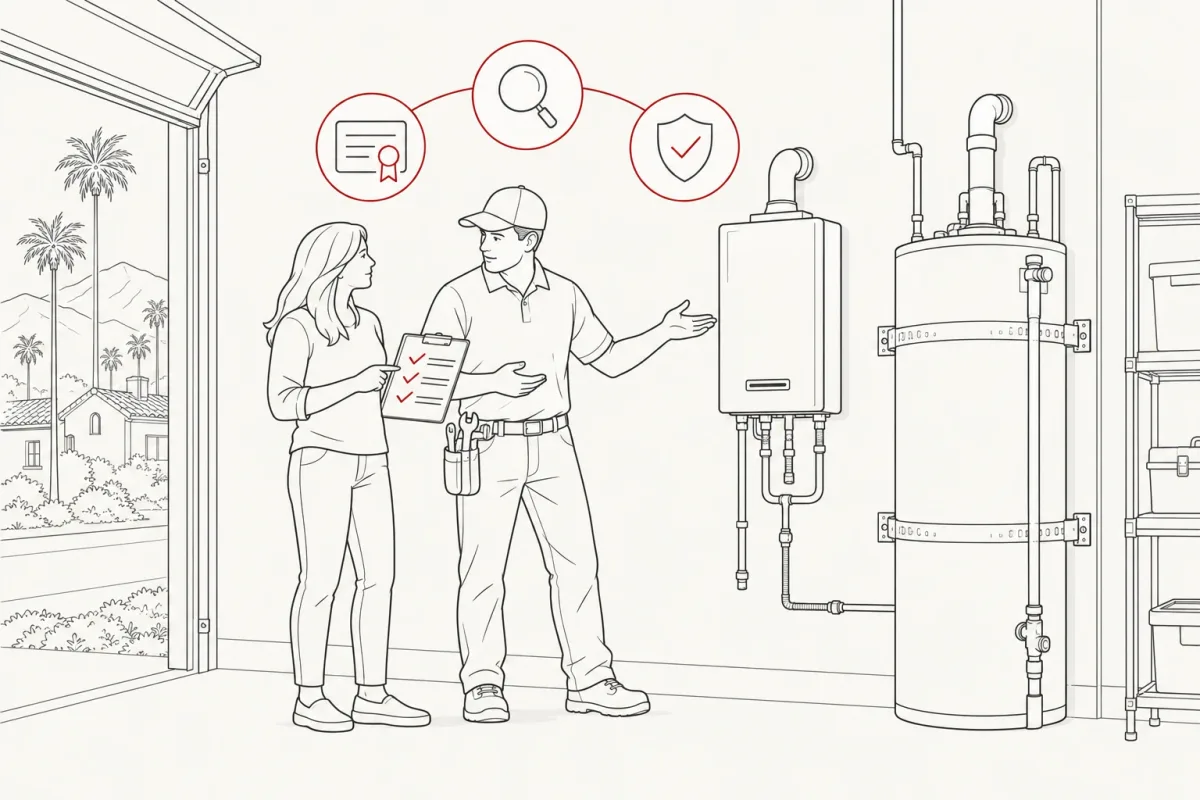
Replacing a water heater is one of the more consequential decisions a homeowner in the Inland Empire will face. The equipment affects every hot-water fixture in the home, most replacements in California need a permit, and the choice between tank and tankless carries long-term implications for energy use and available space. This guide covers what common symptoms can mean, how the two system types compare, what a professional installation involves in Rancho Cucamonga, and what affects the cost.
Common water heater symptoms, and what they can mean
Many water heater problems show symptoms before the unit stops working. A symptom alone does not tell you whether the heater needs a repair or a replacement: the same sign can have more than one cause, so the unit's condition needs to be checked first.
Age is one factor. Water quality, how the unit was installed and how well it has been maintained also affect how long a heater lasts, so an older unit that is working well does not automatically need replacing. When a problem does appear, the unit's age, together with its condition, helps decide whether a repair or a replacement makes more sense.
- Rust-colored or discolored hot water can come from corrosion inside the tank, a worn anode rod, or rust from the home's pipes rather than the heater. A corroded tank cannot be repaired; the other causes may not need a new heater.
- Rumbling or popping sounds during heating cycles often point to sediment on the tank floor. Depending on how much has built up and the tank's condition, flushing may help.
- Inconsistent water temperature, shifting from hot to lukewarm without any change in your settings, can come from a thermostat or heating element, a burner problem on a gas unit, or more hot-water demand than the unit was sized for.
- Water around the base of the unit can come from a loose fitting, a valve or the tank itself. A leaking fitting or valve can often be fixed; a leak from the tank cannot. Have any leak checked promptly, because it can get worse.
If you notice any of these signs, request a quote and describe what you are seeing, along with the unit's age if you know it. Our team reviews the heater's condition before recommending a repair or a replacement.
Tank vs. tankless: how the two systems compare
The decision between a tank and a tankless water heater comes down to your household's hot-water demand, available space, and how long you plan to stay in the home.
How tank water heaters work
A storage tank water heater keeps a reservoir, typically 40 to 80 gallons, at a set temperature around the clock. When you open a hot-water tap, heated water flows from the tank and cold water enters to replace it.
The main advantage is simplicity. Tank units are widely available, straightforward to install, and less expensive upfront. The trade-off is standby heat loss: the unit uses energy to keep water hot even when no one is using it.
Lifespan: 8 to 12 years, though hard water in the Inland Empire can shorten that range without regular maintenance.
How tankless water heaters work
A tankless unit heats water on demand. When you open a tap, cold water passes through a heat exchanger and comes out hot within seconds. There is no stored reservoir.
The advantages include a longer service life, lower standby energy loss, and a smaller footprint, useful in the compact utility spaces common in Rancho Cucamonga homes. The trade-off is a higher upfront equipment cost and, in some homes, the need for a larger gas line, new venting or a dedicated electrical circuit to support the unit's peak demand.
Lifespan: 15 to 20 years with annual descaling, a meaningful consideration in areas with hard water like much of San Bernardino County.
What affects the cost
- The equipment: tank capacity or tankless flow rate, fuel type (gas or electric) and efficiency rating.
- The switch: a like-for-like tank swap is the simplest job. Moving from tank to tankless often adds gas, venting or electrical changes.
- Code requirements: venting, seismic strapping, expansion tanks and drain lines that the current code calls for.
- Access: attics, closets, garages and tight utility spaces each change the work involved.
Our team reviews your setup and sends a quote for your home before any work is scheduled.
Which system fits your home
A tank unit is often the right choice if you need to replace a failed heater quickly, are working within a tight budget, or your home's gas and electrical service would need significant changes to support a tankless unit.
A tankless unit can make more sense for larger households with overlapping hot-water demand, homeowners who want to cut standby energy use, or anyone planning to stay in the home for many years. Whether it lowers running costs depends on the units compared, local gas or electricity rates, the installation changes needed and maintenance.
Our team can review your existing setup before the appointment and recommend the right system before any equipment is purchased.
Permitting and licensing in California
Water heater installation in California is regulated work. A replacement that involves gas lines, venting, or changes to existing plumbing should be done by a licensed contractor and, in most cities, needs a permit from the local building department.
The license classification for plumbing work in California is the C-36 Plumbing Contractor license, issued by the California Contractors State License Board (CSLB). A contractor with this license has passed state-administered testing, carries the required bond, and is legally authorized to do the work. You can check any contractor's license on the CSLB website.
Installation Pros holds a CSLB C-36 license. This matters in practice: a water heater installed without a permit or by an unlicensed contractor can cause problems when you sell the home, affect manufacturer warranties, and leave you without recourse if something goes wrong. Ask our team what your job needs for your city.
What a professional installation visit involves
Knowing what happens during an installation helps you prepare the space and set accurate expectations.
Before the appointment
Before the installation date, our team follows up to confirm scheduling, review equipment fit, and coordinate access. This is when you describe the current unit: its location, fuel type, and any known issues with the existing setup. Tell our team what you do not know yet. Our team can follow up where more information is needed.
If you are replacing a tank unit with a tankless system, this conversation also covers whether your gas line, venting or electrical service needs changes. Identifying that before the appointment prevents delays on the day of installation.
Day of installation
A typical water heater replacement involves shutting off the water supply and the gas or electrical connection to the existing unit, draining and removing the old equipment, inspecting the existing connections and venting for code compliance, installing the new unit, and testing the system before the technician leaves.
For tankless installations, the work may also include mounting the unit to the wall, new gas line or venting runs, and a condensate drain if the unit type requires one.
A straightforward tank swap generally takes two to four hours. Tankless installations that need changes to the home take longer.
Emergency installations
If your water heater has failed, you can request an emergency install for a job needed within 72 hours. It is not confirmed until our team calls you about availability, and a 50% surcharge applies to the total job cost if our team accepts the job.
Service area
Installation Pros serves homeowners across six Southern California counties from its base in neighboring Fontana: San Bernardino, Los Angeles, Orange, Riverside, San Diego and Ventura counties. Customers rate the company 4.9 stars across more than 1,200 reviews.
Frequently asked questions
Do I need a permit to replace a water heater in Rancho Cucamonga?
In most cases, yes. California requires a permit for water heater replacements that involve gas lines, venting changes, or new connections. Ask our team what your job needs.
What license should a water heater installer have in California?
Look for a CSLB C-36 Plumbing Contractor license. It is the state classification that authorizes a contractor to do residential plumbing work, including water heater installation. You can check any contractor's license status on the CSLB website.
How long does a water heater installation take?
A standard tank-to-tank replacement typically takes two to four hours. Tankless installations, or any job that needs gas line, venting or electrical changes, take longer. Our team can give you a more accurate time once the scope is confirmed.
Can I install a tankless water heater where my tank unit was?
Often yes, but not always without changes. Tankless units have different venting requirements, and some need a larger gas supply line or a dedicated electrical circuit. The conversation before the appointment is the right place to work through those details.
How do I choose between a tank and a tankless water heater?
The main factors are household size, budget, and how long you plan to stay in the home. Tankless units cost more upfront but last longer and use less standby energy. Tank units are less expensive to install and simpler to replace. Our team can help you decide which system fits your home.
What if my water heater fails before I can schedule a standard appointment?
Request an emergency install for a job needed within 72 hours. It is not confirmed until our team calls you, and a 50% surcharge applies to the total job cost if our team accepts the job.
Does hard water in the Inland Empire affect water heater lifespan?
Yes. San Bernardino County has notably hard water, which speeds up sediment buildup in tank units and scale in tankless heat exchangers. Flushing a tank unit and descaling a tankless unit once a year extends equipment life.
Request your water heater quote
Request a quote online or call (909) 768-3650. Our team follows up to confirm scheduling, review equipment fit, and coordinate access.